If you have ever driven through Forest Hills or Oleander and thought, “Why does every block feel a little different?”, you are noticing one of the area’s biggest draws. These neighborhoods were shaped over decades, not built all at once, so the architecture feels layered, established, and full of character. If you are buying, selling, or simply trying to better understand what gives these Wilmington neighborhoods their appeal, this guide will help you spot the styles, understand how they live, and see why design matters here. Let’s dive in.
Forest Hills and Oleander at a Glance
Forest Hills and the Oleander area are best understood as early- and mid-20th-century suburbs with a strong sense of place. Forest Hills began developing in the late 1920s and saw major growth in the 1930s, while Oleander was marketed as “The Suburb Beautiful” as early as 1914.
Both areas stand apart from older grid-pattern neighborhoods in Wilmington. Their curving streets, deeper setbacks, larger lawns, and park-like feel create a softer streetscape that follows the natural topography and surrounding landscape.
Why the Streetscape Feels Different
Part of the charm in these neighborhoods comes from how the homes sit on their lots. Preservation and planning sources describe this side of Wilmington as curvilinear, shaped by rolling land, natural woodlands, and Burnt Mill Creek.
That setting changes the way architecture is experienced. Instead of a uniform row of houses, you get a neighborhood rhythm of mature landscaping, varied rooflines, and homes that reveal themselves gradually from the street.
Forest Hills Architecture
Forest Hills is not a one-style neighborhood. It has a broad mix of homes that reflects several decades of construction and changing design preferences.
Today, the neighborhood is often associated with brick cottages, Colonial Revival homes, and generous front lawns. Current examples also show Georgian houses, Neoclassical Revival homes, Cape Cod homes, brick ranches, and split-level contemporary designs.
Colonial Revival and Related Styles
Colonial Revival is one of the clearest style influences you may see in Forest Hills. According to the National Park Service, this style draws from Georgian and Federal precedents and often features symmetry, prominent front entries, columns or pilasters, fanlights, and Palladian windows.
In practical terms, these homes often read as formal and balanced from the curb. They can feel more traditional in layout too, with clearly defined rooms and a stronger sense of separation between public and private spaces.
Georgian and Neoclassical Influence
Forest Hills also includes homes with strong Georgian and Neoclassical cues. These houses often reinforce the neighborhood’s established character through brick exteriors, centered entrances, and classic proportions.
For buyers, these homes can offer a sense of permanence and architectural presence. For sellers, original details like windows, fireplaces, moldings, and entry features can play an important role in how the home is perceived.
Cape Cod, Ranch, and Split-Level Homes
Not every home in Forest Hills follows a formal revival pattern. The neighborhood also includes Cape Cod homes, ranches, and split-level contemporary homes, which add to its architectural range.
These homes often appeal to buyers who want classic neighborhood character with a more casual floor plan. In many cases, they offer easier paths to updates such as open living areas, expanded primary suites, and improved indoor-outdoor flow.
Oleander Architecture
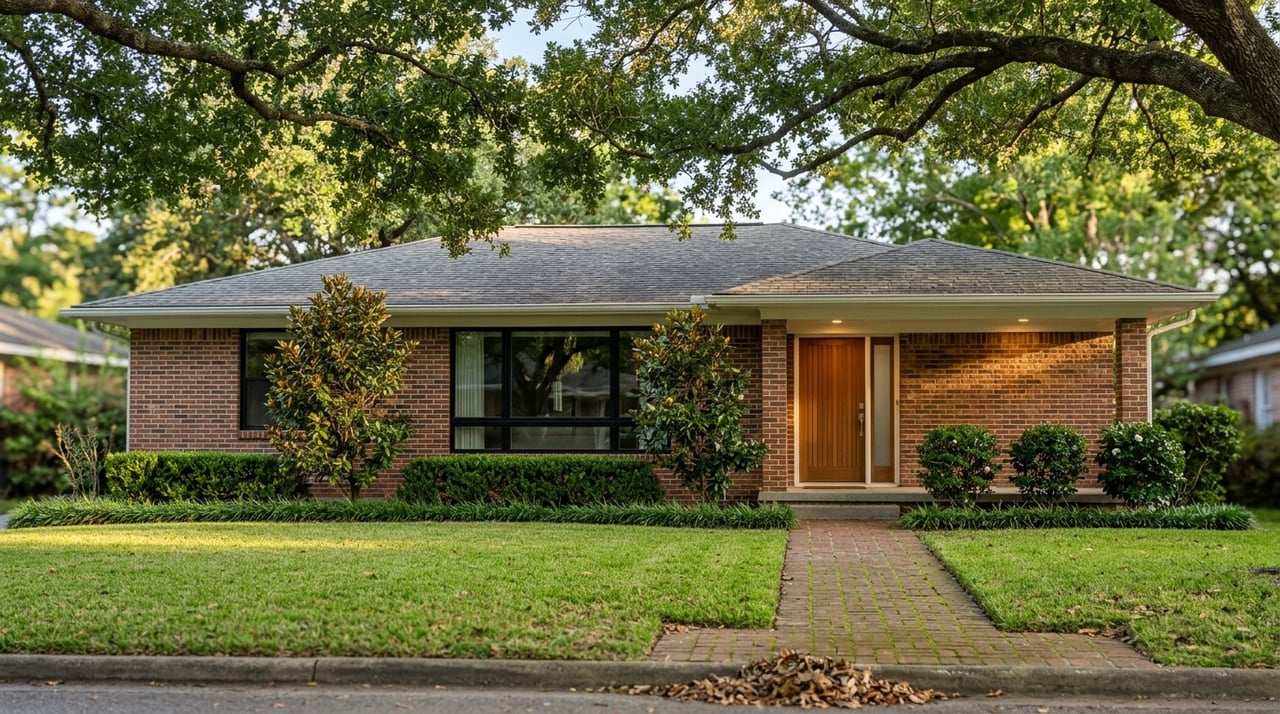
Oleander Estates tends to read more consistently from house to house. Based on current listing patterns, it is more brick-forward overall, with postwar suburban house types playing a strong role in the neighborhood identity.
You are likely to see traditional brick homes, brick veneer ranches, mid-century ranches with modern updates, mid-century modern homes, and some contemporary homes on larger lots. The result is a neighborhood that feels cohesive without feeling identical.
Brick and Mid-Century Character
In Oleander, masonry is a defining visual theme. Brick exteriors help give many homes a grounded, established look, while ranch and mid-century forms keep the streetscape lower and more horizontal than the taller revival homes often found in Forest Hills.
That difference matters when you compare curb appeal. Forest Hills can feel more varied and formal overall, while Oleander often presents a steadier postwar suburban look with room for thoughtful modernization.
Contemporary Updates in Oleander
Many Oleander homes have been updated over time to fit how people live today. Listings commonly show modern kitchens, larger family gathering spaces, screened porches, and refreshed baths paired with original brick exteriors.
This balance is part of the appeal. You can keep the exterior character that helps the home fit the neighborhood while improving comfort and function inside.
How Style Affects Daily Living
Architecture is not only about appearance. It also shapes how a home functions once you are living in it.
Formal revival homes typically emphasize symmetry and defined spaces. That can mean more traditional living and dining rooms, stronger entry sequences, and a layout that feels structured and intentional.
Ranch houses, by contrast, are known for low, horizontal massing and a more casual separation of spaces. The National Park Service notes that ranch interiors often organize family life more informally than earlier revival homes, which helps explain why they are often easier to adapt to open-concept living.
Split-level homes can offer another type of flexibility. Their staggered floor plans often create distinct zones for living, entertaining, and privacy, which can work well for households that want separation without losing flow.
What Buyers Should Notice
If you are shopping in Forest Hills or Oleander, it helps to look past surface finishes and focus on the home’s architectural bones. Style can affect renovation cost, resale appeal, and how naturally a house supports your lifestyle.
A few smart things to notice include:
- Roofline and overall massing
- Window size and placement
- Porch proportions and entry design
- Whether the floor plan is formal, open, or adaptable
- How the home sits on the lot
- Whether landscaping supports the original character
In Forest Hills, the wider style range gives you more architectural variety to choose from. In Oleander, the more consistent brick and mid-century character may appeal if you want a cohesive neighborhood look.
What Sellers Should Know About Updates
In both neighborhoods, the strongest updates tend to respect what makes the home feel authentic from the street. That usually means preserving original brick, rooflines, porch proportions, windows, moldings, and mature landscaping whenever possible.
Inside, buyers often respond well to thoughtful modernization. Updated kitchens, refreshed baths, improved primary suites, and better-connected living spaces can add daily function without stripping away the home’s identity.
Adaptive Reuse Matters Here
The city’s Oleander corridor plan states that adaptive reuse of existing houses is preferred over wholesale redevelopment in parts of the area. That is a useful signal for property owners thinking about long-term value.
In simple terms, updating an existing home in a way that respects its original form may be more aligned with the area’s planning direction than starting over. That does not mean every house should remain unchanged, but it does reinforce the value of renovation with restraint.
Forest Hills vs. Oleander Style Comparison
If you are deciding between the two areas, the architectural experience is one of the clearest differences.
| Neighborhood | Common Styles | Overall Feel | Update Potential |
|---|---|---|---|
| Forest Hills | Colonial Revival, Georgian, Neoclassical Revival, Cape Cod, ranch, split-level contemporary | More layered and varied | Strong, especially for buyers who value character plus customization |
| Oleander | Traditional brick homes, brick veneer ranches, mid-century ranches, mid-century modern, contemporary homes | More consistent, brick-forward, postwar suburban | Strong, especially for interior modernization while keeping exterior character |
Neither neighborhood is better in a universal sense. The right fit depends on whether you are drawn to architectural variety and formality, or a steadier brick-and-mid-century aesthetic.
Why Architecture Supports Value
In neighborhoods like these, style is part of the value story. Buyers are often drawn to established areas where the homes feel distinct, the lots are generous, and the streetscape has matured over time.
That is especially true in Forest Hills, where the range of architectural styles creates visual interest, and in Oleander, where the consistency of brick homes and postwar forms supports a recognizable neighborhood identity. In both places, a well-executed update tends to work best when it complements, rather than competes with, the original design.
If you are considering a move in Forest Hills or Oleander, a close read of architecture can tell you a lot about livability, renovation potential, and long-term appeal. For tailored guidance on buying, selling, or valuing a home in Wilmington’s established neighborhoods, reach out to Happy Clark for a private consultation.
FAQs
What architectural styles are common in Forest Hills, Wilmington?
- Forest Hills includes Colonial Revival, Georgian, Neoclassical Revival, Cape Cod, ranch, brick cottage, and split-level contemporary homes, making it one of the more architecturally varied neighborhoods in the area.
What architectural styles are common in Oleander Estates, Wilmington?
- Oleander Estates is known for traditional brick homes, brick veneer ranches, mid-century ranches, mid-century modern homes, and some contemporary homes on larger lots.
How do Forest Hills and Oleander homes differ in curb appeal?
- Forest Hills often shows a more formal and varied streetscape, while Oleander tends to feel more consistent, lower-slung, and brick-forward.
What should buyers look for in older homes in Forest Hills and Oleander?
- Buyers should pay attention to original architectural features, floor plan flexibility, lot placement, rooflines, windows, porch proportions, and how updates have been handled over time.
What kinds of renovations fit Forest Hills and Oleander homes best?
- The most successful renovations usually preserve exterior character such as brick, windows, moldings, landscaping, and rooflines while modernizing kitchens, baths, primary suites, and living spaces inside.
Why does architecture matter when selling a home in Forest Hills or Oleander?
- Architecture can shape first impressions, buyer expectations, and renovation appeal, so highlighting a home’s original style and thoughtful updates can strengthen its market position.
