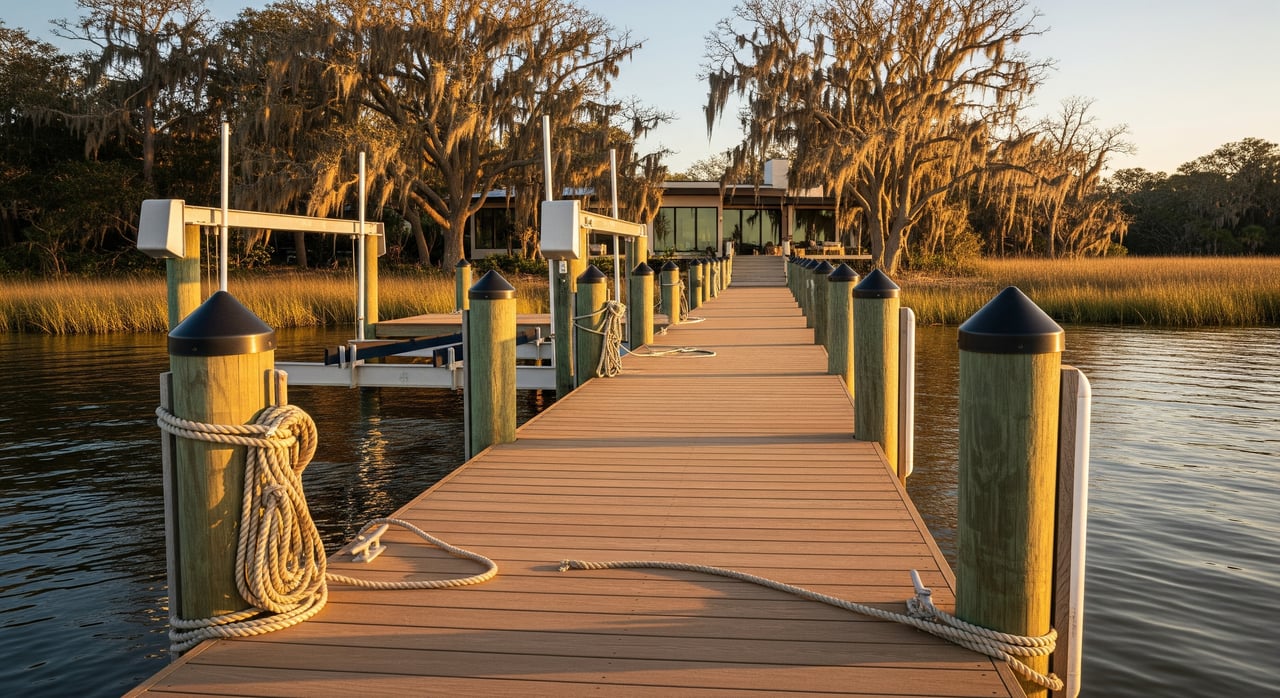
Shopping for a waterfront home in Hampstead and picturing a private dock and boat lift? Before you plan the layout, it helps to understand how North Carolina’s Coastal Area Management Act, or CAMA, shapes what you can build and when. You want smooth approvals and a realistic timeline, not surprises after closing. In this guide, you’ll learn when CAMA applies, which permits you may need, how long reviews usually take, and the smart steps to build your due diligence plan. Let’s dive in.
CAMA basics in Hampstead
CAMA is North Carolina’s coastal planning and permitting program. The state’s NC Division of Coastal Management, or DCM, administers it for projects in coastal wetlands, estuarine and ocean waters, and certain nearby lands. You can review program background and contacts on the NC Division of Coastal Management site. Explore DCM’s coastal management pages.
For buyers, the rule of thumb is simple. If your project touches estuarine waters, the Intracoastal Waterway, coastal wetlands, or public trust waters, CAMA likely applies. Typical covered work includes new or expanded docks, fixed or floating piers, boat lifts, mooring pilings, gangways, bulkheads, and shoreline stabilization. Repairs and replacements can also require review depending on scope and location.
Permit types for docks and lifts
Most single-family shoreline projects that meet size and impact limits seek a CAMA Minor Development Permit. Larger or more complex work, including multi-slip facilities or projects with greater habitat or shoreline impacts, usually needs a CAMA Major Development Permit. Some routine activities can fit under standardized General Permits or authorizations with preset conditions.
DCM evaluates projects against rules on size, placement, shading of vegetation, piling dimensions, lighting, and seasonal work windows. If impacts are higher, you may be asked to adjust your design, reduce the footprint, or use a floating section to limit bottom shading.
Federal and local approvals
CAMA is one layer. Many waterfront structures also need federal and local approvals:
- US Army Corps of Engineers. Structures in navigable waters and any dredge or fill typically require a federal authorization, often under a Nationwide Permit or a project-specific review. Learn more about the Corps’ Regulatory Program here: USACE Regulatory Program overview.
- Section 401 Water Quality Certification. Federal permits often need state 401 certification to ensure water quality standards are met. See the program pages at NCDEQ Water Quality permits.
- Local zoning and building. Pender County or a municipality may have zoning, floodplain, and building requirements, and some local governments issue CAMA minor permits by delegation. Start with Pender County Planning & Community Development.
Timelines and what to expect
Timelines vary based on scope, completeness, and coordination needs.
- Minor CAMA permits for typical residential docks and lifts often take weeks to a couple of months from a complete submittal.
- Major CAMA permits often run multiple months, commonly 60–180 days or more, due to public notice, inter-agency review, and any needed studies.
- Federal authorizations and 401 certification can add weeks to months. If a federal Nationwide Permit applies, review can be faster, but state reviews still apply.
Build cushion into your plan and confirm timing with DCM, the Corps, and the county before you set expectations for your first boating season.
What to check before you offer
A little upfront work can save months later. During pre-offer and due diligence, request and review:
- Copies of any existing coastal permits, building permits, and final approvals.
- Any transferable CAMA or federal permits and documentation that the structure was built as permitted.
- An updated survey showing property lines and the mean high water line, plus photos of existing structures.
- Recorded easements or agreements if access is shared, including HOA rules for docks.
- Any prior repairs, storm damage records, and enforcement notices.
If the property has no dock, ask DCM and Pender County which permit path is likely and whether environmental surveys, like submerged aquatic vegetation (SAV) checks, could be required.
Design choices that ease approvals
Some design decisions can reduce review friction and environmental impacts.
- Favor floating sections over full fixed spans where practical to limit bottom shading.
- Keep the overall footprint modest and avoid dredging if possible.
- Use smaller-diameter piles and spacing that meets standards for habitat and navigation.
- Maintain adequate height and light over areas with vegetation to minimize shading.
- Place structures to avoid SAV and sensitive habitats identified by DCM or the Corps.
These choices can improve your odds for a streamlined minor permit.
Common pitfalls to avoid
Avoiding missteps protects your budget and timeline.
- Starting work without required approvals can lead to stop-work orders, fines, removals, and mitigation.
- Assuming a “repair” exemption covers enlargements or major changes can trigger violations. Confirm scope with DCM first.
- Overlooking seasonal work limits meant to protect fisheries can hold up construction.
- Submitting incomplete plans or missing riparian documentation can delay reviews.
When in doubt, call the agencies before you finalize design or set closing dates that depend on quick construction.
Local context on Hampstead waters
Hampstead and Topsail-area shorelines sit along the Intracoastal Waterway and estuarine systems. Portions of these waters support submerged aquatic vegetation and important fisheries habitat. That can shape where a dock can go, how large it can be, and whether floating sections are preferred. The Intracoastal Waterway and navigation channels also influence pier lengths and where boats can safely moor. Ocean hazard rules differ from estuarine rules, and most Hampstead buyers are working within estuarine guidelines. When in doubt, confirm your shoreline type with DCM.
Who to call first
Start early and speak with the teams who will review your plans.
- NC Division of Coastal Management. For CAMA jurisdiction, permit type, and project guidance. Find program info and district contacts on DCM’s site.
- US Army Corps of Engineers. To confirm federal permits or Nationwide Permit pathways. See the USACE Regulatory Program.
- NCDEQ Water Quality. For 401 certification details connected to federal permits. Review Water Quality permits.
- Pender County Planning & Community Development. For zoning, building, floodplain, and any delegated minor CAMA permits. Start at the Pender County website.
Have your parcel information, a simple sketch or survey, and photos ready when you call.
A smart timeline for your purchase
Here is a simple way to stage your steps.
- Pre-offer. Talk with DCM and Pender County about feasibility for your parcel. Ask the seller for permits, surveys with mean high water, and any as-built or shared-dock agreements.
- Due diligence. Engage a local marine contractor or coastal engineer to refine layout and confirm likely permit class. Build a realistic timeline that accounts for minor or major CAMA review and any federal coordination.
- Post-closing. Finalize drawings, submit complete applications, respond quickly to any agency questions, and plan construction windows that respect seasonal limits.
Final thoughts
Buying on the water in Hampstead is about matching your lifestyle with a shoreline that supports it. When you understand how CAMA, the Corps, and local rules fit together, you can choose the right property, set a realistic schedule, and design a dock that works for both boating and the environment.
If you want help pressure-testing a property’s dock potential, document checklist, or timeline, connect with Happy Clark for one-on-one guidance tailored to your goals.
FAQs
What is CAMA and when does it apply to docks in Hampstead?
- CAMA is North Carolina’s coastal permitting program and it typically applies to docks, lifts, and shoreline work in estuarine waters, public trust waters, and adjacent coastal areas.
Do I need both CAMA and US Army Corps permits for a dock?
- Many projects need both, since structures in navigable waters often require a federal authorization in addition to CAMA review; confirm with DCM and the Corps.
How long do CAMA minor permits usually take for residential docks?
- When submittals are complete, minor permits often take weeks to a couple of months, while major or federal reviews can take several months.
What documents should I request from a seller who already has a dock?
- Ask for coastal permits, any as-built documentation, surveys showing mean high water, recorded easements or shared-dock agreements, and records of repairs or enforcement.
Can I expand or replace an existing dock after closing?
- You can often repair or replace, but expansions or changes still need review; confirm scope with DCM and local permitting before planning work.
What happens if a dock was built without permits?
- Agencies can issue stop-work orders, fines, and require removal or mitigation, which can complicate sales and ownership plans.