Thinking about a whole‑home generator in Landfall after the last storm season? You are not alone. Many homeowners want reliable backup power that fits ARC standards and protects resale value. In this guide, you will learn how approvals work, where a generator can go, what it costs, and how it can play into your long‑term return. Let’s dive in.
Who approves what in Landfall
Start with ARC approval
Landfall uses an Architectural Review Committee that oversees exterior changes, including generators, pads, fuel tanks, conduits, and screening. You should secure written ARC approval before any work starts. Plan for a review timeline that can take 2 to 4 weeks and include product specs, a site plan, sound ratings, and screening details in your submittal.
City vs. County permits
Generator installations require building and electrical permits and, when applicable, gas or LP permits. Permit offices differ depending on whether your property sits inside the City of Wilmington or in unincorporated New Hanover County. Confirm your parcel’s jurisdiction early so you contact the correct inspections office and use the right forms.
Utility notification and safety
Your generator must connect through a proper transfer switch so it does not back‑feed the grid. Duke Energy, the primary utility in the area, typically requires notification and may have specific interconnection steps. Your licensed electrician will handle the transfer switch, labeling, and coordination as part of a safe installation.
Codes that apply
Installations must meet the North Carolina State Building Code, the National Electrical Code for wiring and transfer switches, and relevant NFPA standards for stationary engines and fuel storage. Your contractors should be familiar with these requirements and pull the correct permits.
Siting and safety fundamentals
Setbacks and visibility
ARC design guidelines often require setback distances from property lines and discourage equipment placements visible from streets, golf corridors, or common areas without screening. Plan a location that is discreet, that allows screening, and that meets any stated setbacks or view corridor rules.
Clearances and exhaust safety
Your manufacturer installation manual will specify minimum clearances from doors, windows, HVAC intakes, and eaves. Many models require several feet of clearance to avoid exhaust entering the home. Keep the unit away from combustible materials and dry landscaping and follow all model‑specific instructions and code requirements.
Fuel choices: natural gas vs. propane
- Natural gas: Reliable ongoing fuel supply if service remains live during an outage. It requires a licensed plumber or gas fitter, and sometimes a gas meter upgrade.
- Propane (LP): Common where natural gas is not available. Tanks must meet strict setback, anchoring, and leak‑protection rules. Aboveground or underground options both require permits and code compliance.
- Diesel: Typically used for larger commercial systems. It is uncommon for single‑family homes due to storage, noise, and maintenance considerations.
Flood and wind resilience
Parts of Landfall lie in coastal flood zones. Check FEMA flood maps for your parcel and confirm the Base Flood Elevation. In flood‑prone areas, elevate generators and fuel tanks above design flood levels or use approved anchoring methods to prevent flotation. In hurricane‑exposed areas, use manufacturer anchoring kits or local tie‑downs that meet wind‑load requirements.
Electrical equipment and sizing
Whole‑home systems use an automatic transfer switch installed by a licensed electrician. Proper sizing depends on a professional load calculation that accounts for starting and running loads for major systems. An undersized unit can cause performance issues. An oversized unit adds cost you may not need.
Sound, screening, and neighbor goodwill
What to expect on noise
Modern residential standby generators are typically rated around 60 to 70 dBA at a manufacturer‑specified distance, often 23 to 33 feet. Actual sound depends on the model, distance, and load. ARC rules and city or county noise ordinances can apply. Many ARCs prefer locations and mitigation that reduce impact on neighbors.
Screening and finishes
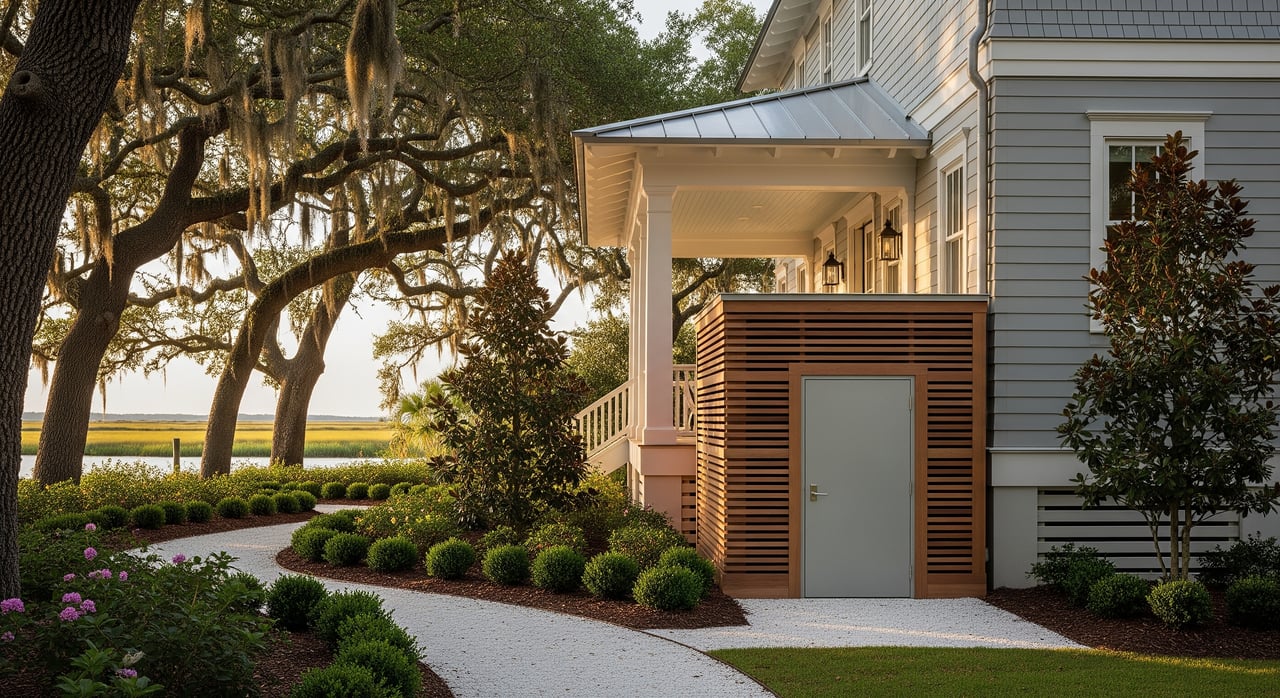
Landscaping, evergreen buffers, or louvered enclosures can help soften views. Keep all screening outside the required cooling and exhaust clearances in the installation manual. Visible conduits may need to be painted or concealed and the generator color may need to coordinate with the home.
Testing without the nuisance
Whole‑home units often run brief weekly self‑tests. Program these for a weekday mid‑morning window to minimize disturbance. If you schedule extended testing or maintenance, plan ahead and let adjacent neighbors know.
Permits, pros, and installation steps
Permits you will likely need
- Building and electrical permits for the pad, generator, and transfer switch
- Mechanical or gas permit for natural gas work
- LP tank and plumbing permits for propane installations
- Floodplain or anchoring documentation if your property is in a designated flood zone
Your inspections office will outline required checkpoints, which can include pad readiness, electrical bonding and grounding, gas line testing, and final electrical.
Hire licensed trades and keep records
Use a licensed electrician for the ATS and wiring and a licensed plumber or gas fitter for gas lines. Propane tanks need a licensed installer. Some manufacturers require factory‑trained installers for warranty coverage. Keep copies of ARC approval, permits, inspection sign‑offs, and equipment registrations for your records and eventual resale.
Typical timeline
- Preliminary design and site selection. Meet informally with ARC if helpful.
- Submit ARC application with plans, sound specs, and screening details.
- After ARC approval, apply for building, electrical, and fuel permits.
- Coordinate utility notification and any interconnection requirements.
- Install pad, anchoring, fuel line or tank, generator, and transfer switch.
- Schedule inspections and obtain final sign‑offs. Register equipment if required.
- Set your maintenance plan and weekly test schedule. File all documentation.
Costs, ROI, and resale in Landfall
What drives overall cost
Installed cost depends on capacity, fuel type, and site complexity. Expect line items for the generator and transfer switch, electrical work, gas line extensions or propane tanks, concrete pad and anchoring, permits and ARC fees, and any screening or painting to meet ARC standards. Coastal or flood‑zone installs that need elevation, anchoring, long gas runs, or underground tanks tend to be higher.
A realistic national installed range for residential standby generators is about 8,000 to 25,000 dollars or more depending on capacity and complexity. Local prices vary, so get multiple licensed quotes specific to your site and fuel choice.
What to expect on ROI
Standby generators in residential settings do not usually return 100 percent of their cost at resale. In storm‑prone coastal markets, they can improve buyer appeal and reduce perceived risk, which may shorten time on market or support stronger offers. In a higher‑amenity neighborhood like Landfall, a professionally installed, ARC‑approved, neatly screened unit often reads as a premium feature.
Disclosures and insurance
North Carolina sellers must disclose known material facts and additions. You should disclose installed generators and any fuel tanks and keep permits, ARC approvals, final inspection sign‑offs, and service records ready for buyers. Notify your insurance carrier after installation. Some carriers offer benefits for standby power or may require certain conditions.
A practical pre‑install checklist
- Confirm property jurisdiction: City of Wilmington or New Hanover County
- Download and read Landfall ARC Design Guidelines and submittal requirements
- Gather manufacturer specs: model, sound rating, clearance diagram, installation manual
- Request a professional load calculation and a site plan with setbacks and screening
- Check FEMA flood maps for your parcel. If in a flood zone, plan for elevation or anchoring
- Contact your utility for interconnection and notification steps
- Obtain multiple quotes from licensed, insured installers who will pull permits
- Decide on a maintenance plan and weekly test time and include both in your ARC submittal
- Keep a project file: ARC approval letter, permits, inspections, utility forms, warranty, and service logs
How to protect neighbor relations and resale value
- Choose a location that directs sound away from adjacent living areas.
- Add acoustic measures where appropriate, such as rubber pads or sound baffles recommended by your installer.
- Program the self‑test for a weekday mid‑morning window.
- Maintain neat conduit runs and paint or conceal exposed lines per ARC preference.
- Keep your maintenance current. A well‑maintained unit reassures buyers and appraisers.
When a whole‑home generator makes sense
If you travel often, work from home, or keep critical systems running, standby power can offer peace of mind. In Landfall’s coastal environment, planning for flood elevation and proper anchoring is key. When you pair ARC‑approved design, licensed installation, and clear documentation, you position your home for smoother ownership and better resale conversations.
If you would like local guidance on siting choices, resale considerations, or what buyers in Landfall expect, connect with Happy Clark. You will get a practical path from concept to sign‑off and a clear plan to keep your records ready for your next move.
Ready to move forward with confidence? Connect with Happy Clark at Unknown Company to request a complimentary home valuation or schedule a private consultation.
FAQs
Do Landfall homeowners need ARC approval for a generator?
- Yes. The ARC typically requires written approval before any exterior mechanical installation, including the generator, pad, fuel tank, screening, and visible conduits.
Which office issues my permits in Landfall, Wilmington?
- It depends on jurisdiction. Properties inside the City of Wilmington use the city’s inspections office. Properties in unincorporated areas use New Hanover County. Confirm your parcel before applying.
How loud are whole‑home generators in a neighborhood setting?
- Modern standby units are often rated around 60 to 70 dBA at a manufacturer‑specified distance. Location, screening, and programmed test times help minimize impact.
What fuel is best for a Landfall standby generator?
- Natural gas offers seamless supply where available. Propane is a solid alternative where gas is not present. Both require permits and code‑compliant installation. Diesel is uncommon for single‑family homes.
Are flood and wind considerations required in Landfall?
- Yes. If your home sits in a flood zone, elevate or anchor equipment to meet floodplain rules. Use wind‑load anchoring suitable for hurricane conditions as specified by the manufacturer and local code.
What is the typical installed cost range?
- A realistic national range is about 8,000 to 25,000 dollars or more, depending on capacity, fuel choice, and site complexity. Coastal or flood‑zone upgrades can increase costs.
Will a generator raise my home’s resale value?
- It can improve marketability and buyer confidence, especially in storm‑prone areas, though it does not usually recoup 100 percent of cost. Documentation and clean ARC‑compliant installation support value.
What documents should I keep for resale?
- Keep ARC approval letters, all permits and final inspections, utility notification forms, model specs and sound ratings, maintenance records, and any floodproofing or anchoring documentation.
